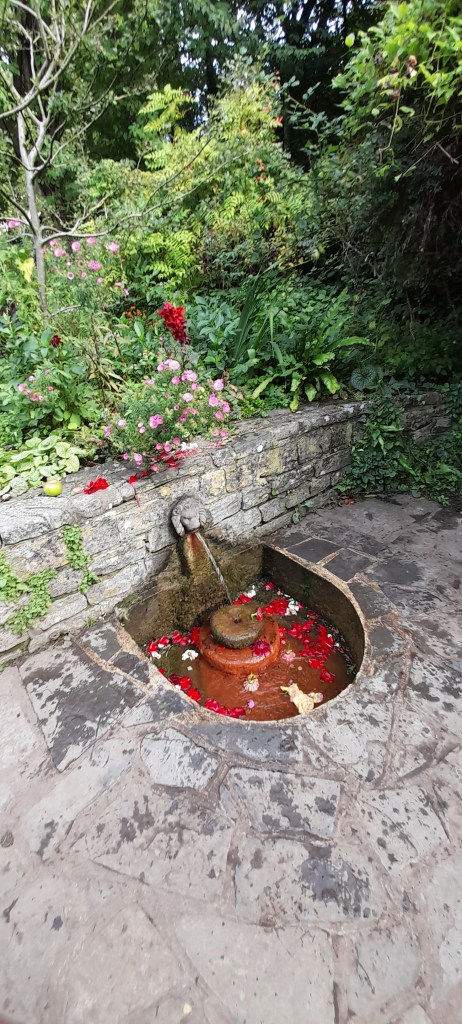
Let’s go – Chalice Well and Glastonbury for Samhain.

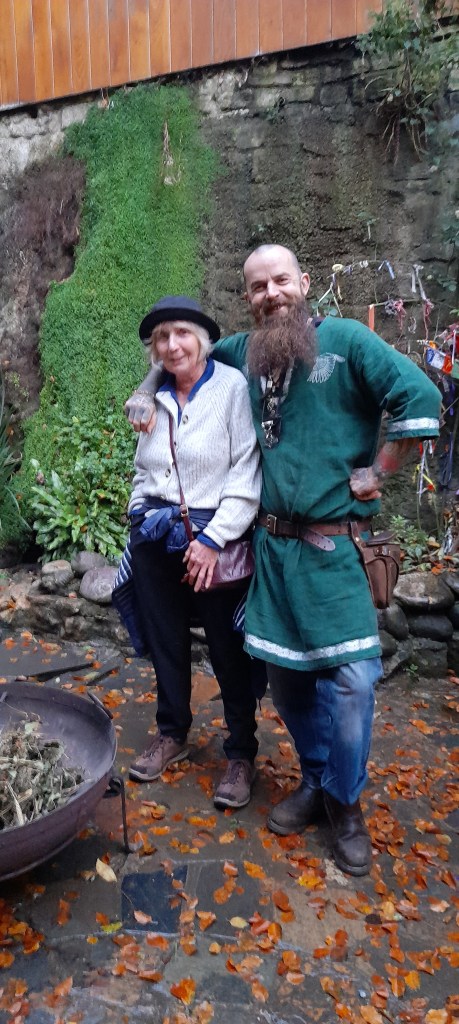
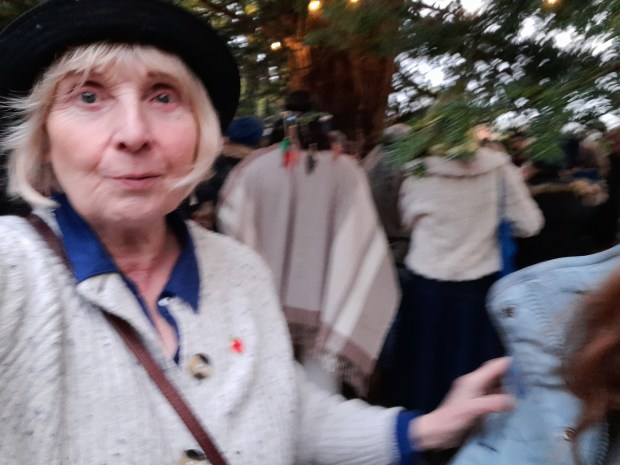
This was supposed to be a selfie but Karen moved too soon.

Many of those attending Samhain were probably Pagan or worshipped nature and nature’s gods. I respect that. I’m not a Pagan, I’m an Atheist but I get the concept of energy. And if it’s a group of people with such energy then surely the stronger the ‘current’. Albert Einstein said or it’s attributed  “Energy cannot be created or destroyed; it can only be changed from one form to another”. And if that’s good enough for him – it’s more than good enough for me 🙂

Arrived about 4 p.m. just before dusk.

In a valley in Glastonbury, Somerset, from the ground is a spring –  the Chalice Well or ‘The Blood Well’, because of its rich iron content. The water never ceases to flow and always at 25,000 gallons per day and a temperature of 52 degrees Fahrenheit.   And of course as it’s Glastonbury – a sacred area, a foundation for many wonderful legends and tales. The spring and its waters are no  exception and include the story of Joseph of Arimathea said to have visited the site with two containers to hold the blood and water from Christ’s wounds. 

From that spring came The Chalice Well Trust – dedicated to nature and set up by Wellesley Tudor Pole a story well worth exploring.

If we are willing to show friendliness and compassion towards those who control the Kingdoms of Nature, they in turn will help us to restore health and well-being to our minds and bodies and to harmonise the conditions which surround us”

It definitely felt the best place to celebrate Samhain with its gentle and easy to participate in ceremony. As dusk fell – we all said goodbye to autumn and welcome to the winter with sage log burning fires. 
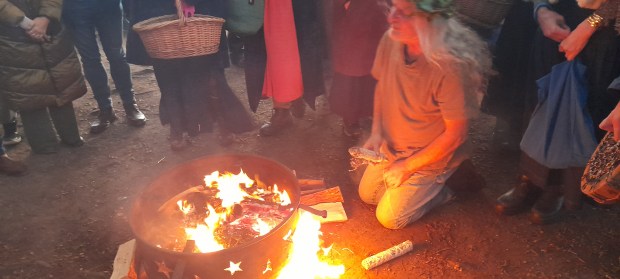
Smoke definitely does get in your eyes.

Photo bombed by a medieval axeman

People must’ve adapted these ceremonies and added to them as time went by. What is frustrating is that the Druids and Pagans and other old religions never wrote anything down about their ceremonies but shared by word of mouth.  I suppose the human psyche doesn’t alter and what felt right to the Celts 2000 years ago feels right to Celts and others now. 

It was a refreshing ceremony in one way but not so in another. The sage and wood burning although very dramatic did stay with me until I gave my clothes a very 21st Century wash. Throwing sage of the fire was the right thing to do but I was impressed by the lungs of those sitting around the fire The didn’t cough their way through the ceremony – like I did.  
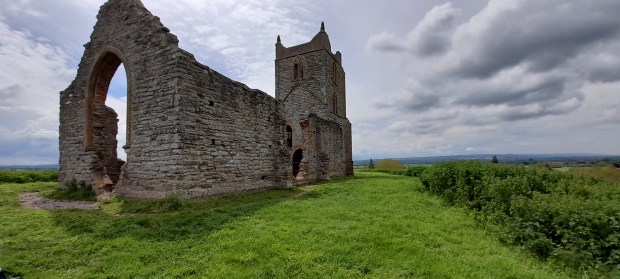
Burrow Mump Somerset

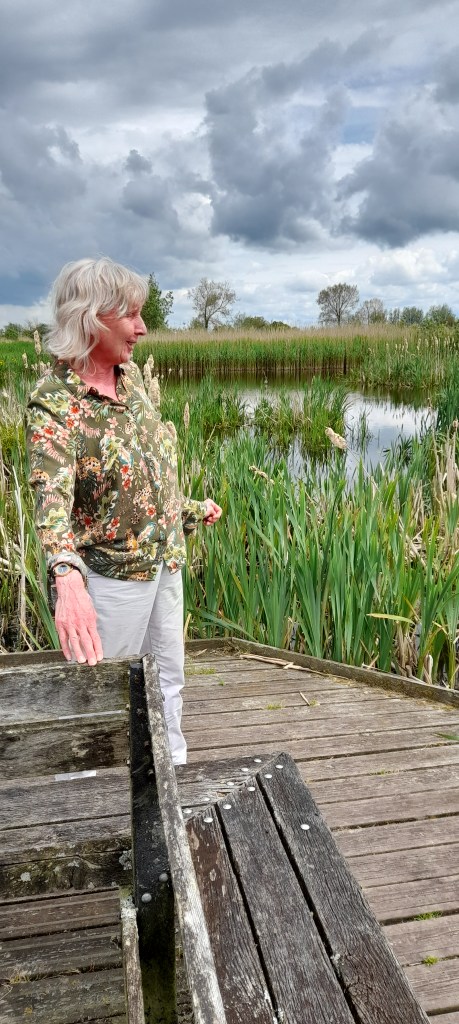
Not as touristy as the Tor – so you sometimes get it all to yourself.

History-

Burrow Mump is a monument of both strategic and archaeological importance. When you reach the top you understand why . It overlooks the Somerset Levels and Southlake Moor in the village of Burrowbridge in Somerset. Dug out by the Normans as a defence the view is 360 degrees and stunning. It stands at the junction of two rivers that cross the Somerset Levels. The Mump itself is now designated as a War Memorial and was donated to the National Trust in 1946 to commemorate the Somerset men and women lost in World War I and World War II. 

The church – started in late 1700s was never finished – run out of money -but is thankfully a Grade II listed building. I’m not an architect so I won’t go in to its construction but I’m told the church was situated, sensibly to look down on a settlement but no evidence of that now. Before that it was the site of a medieval church. It doesn’t feel like a unfinished ruin – I think it would’ve been beautiful. Once surrounded by marsh land the mump would’ve floated hauntingly and gothically out of the waters of the Levels.

I’ve climbed to the top a few times and have slid down (not on purpose) twice. Nonetheless – I still enjoy the climb and descent!

A Family Home with its own Chapel.

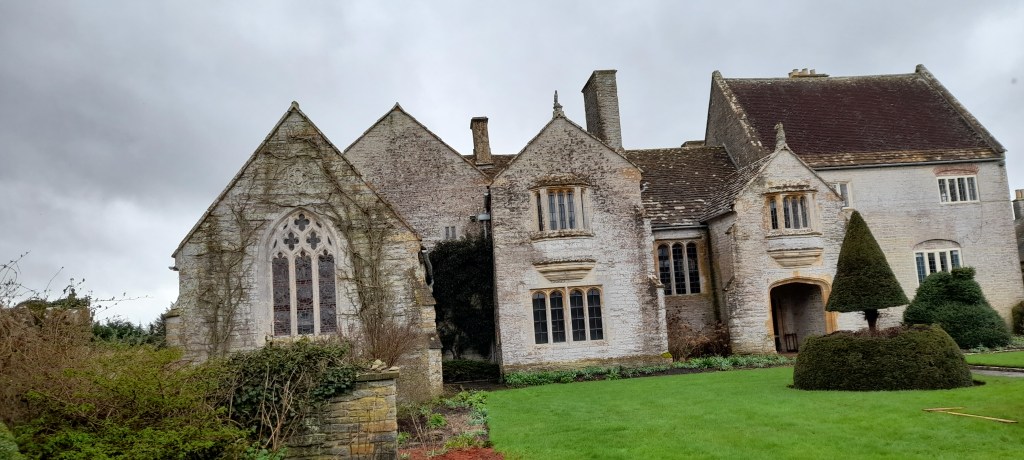
Lytes Cary Manor

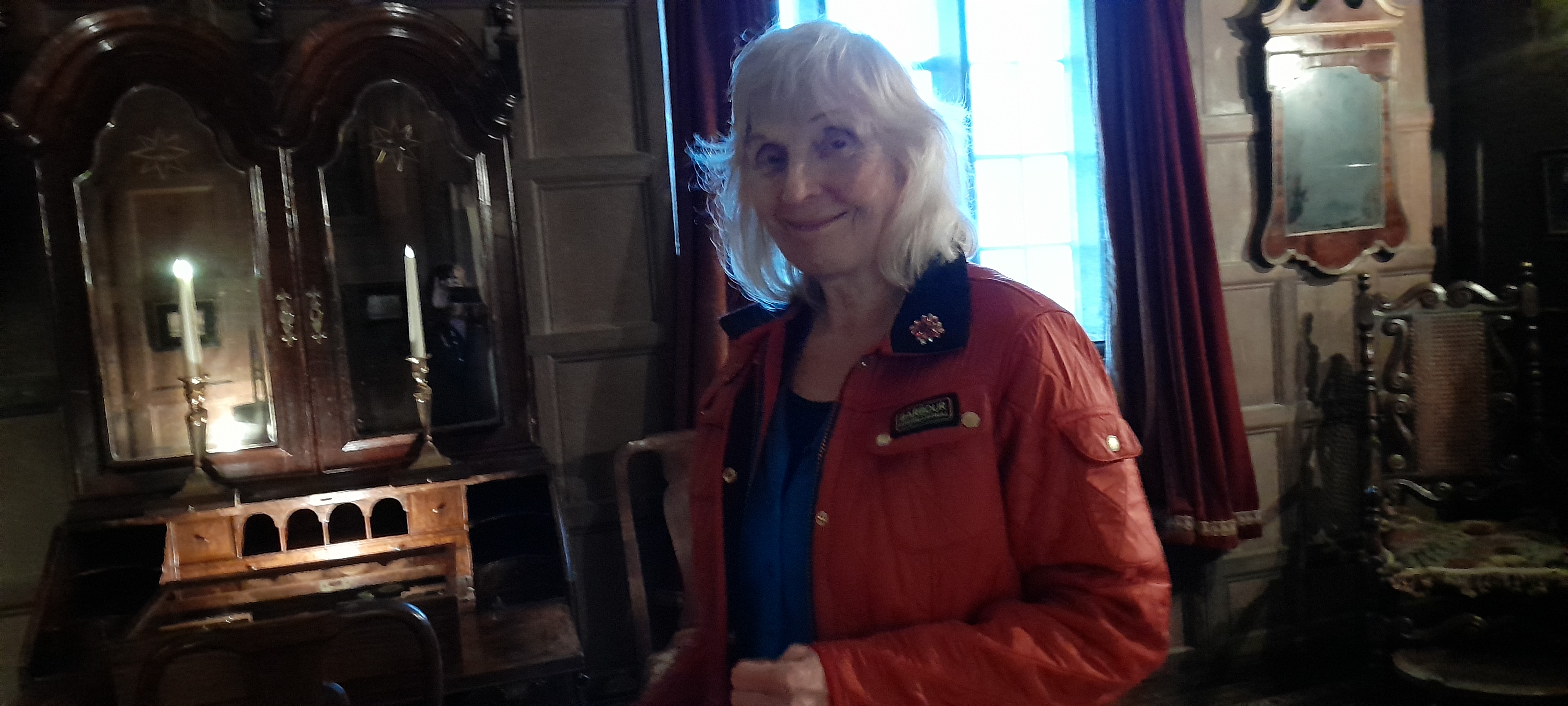
I don’t know much about architecture but I like to look at old buildings and I love the way that 21st Century visitors blend in and bring them to life.

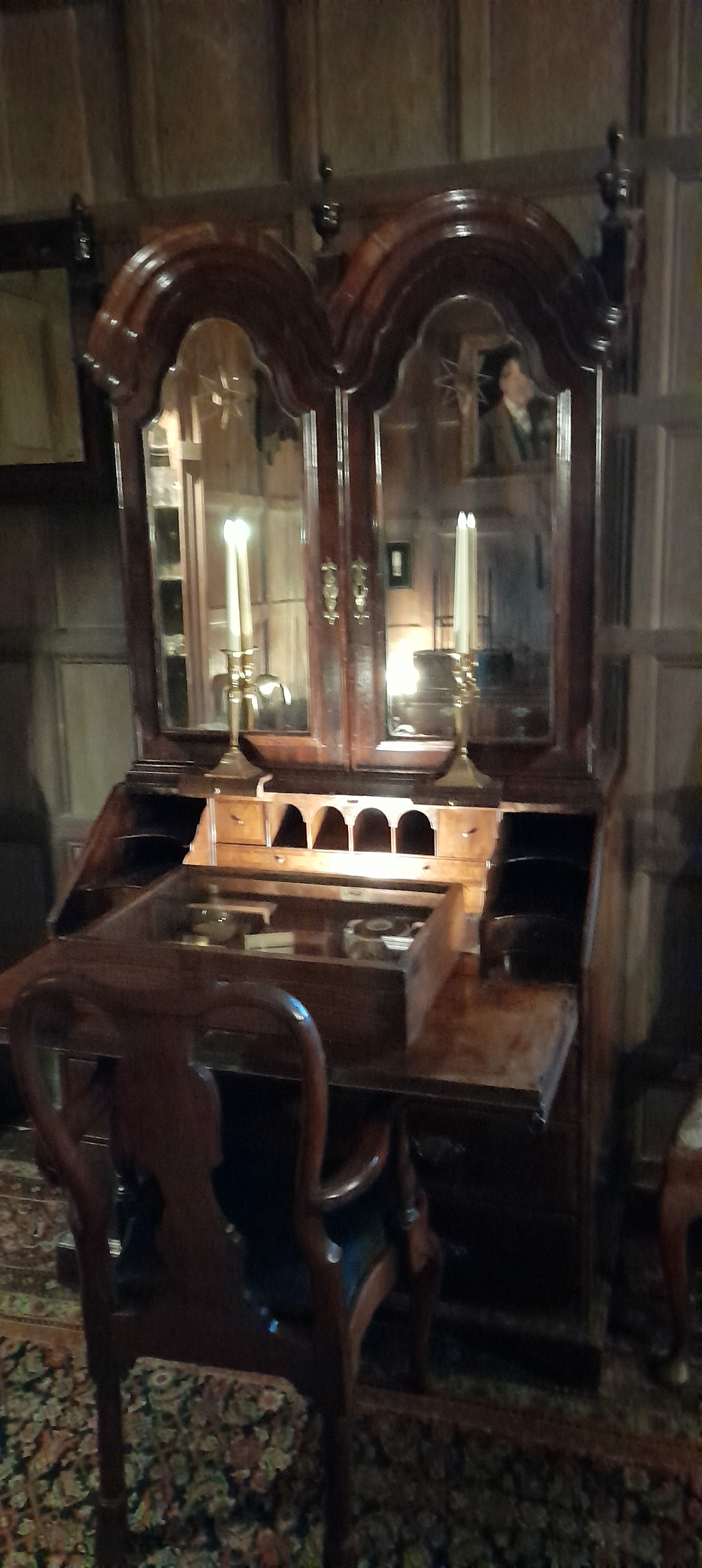
For me it’s all about big stone houses, dusty smells and helpful volunteers. I don’t try to give lots of facts, I prefer the photos to do the talking. Lytes Cary Manor has all that. It didn’t really feel like a manor more like a family home – a family made good not born noble.

The first of the family to live there was William le Lyte, a feudal tenant, as early as 1286. The chapel dates back to 1343.

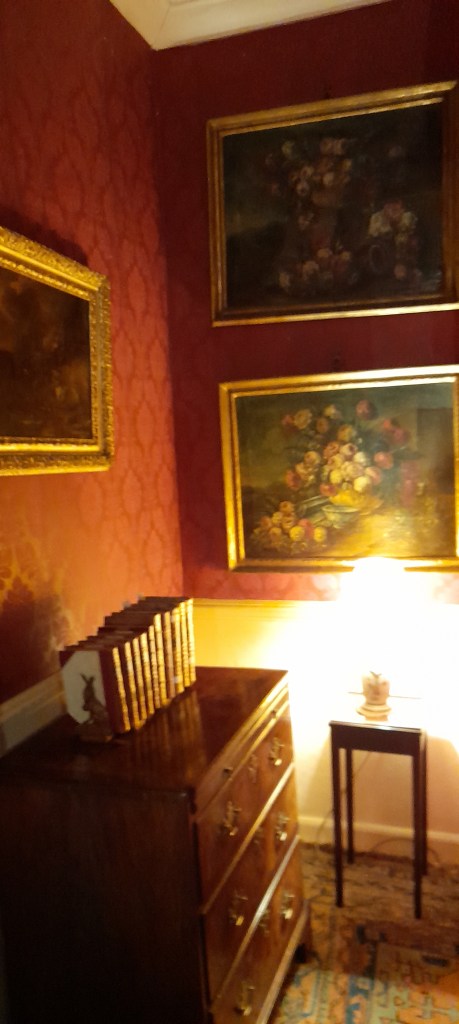
I found the house very atmospheric with a lived in feel. And volunteers sitting in the rooms appeared to be really at ease and comfortable.

Sir Walter and Lady Flora Jenner took over the house in the early 20th Century, restoring the rooms as they were/or should’ve been in the 17th Century. I got a bit of a Bloomsbury Set vibe in the house and Gertrude Jekyll feel from the garden. But I’m no gardener.

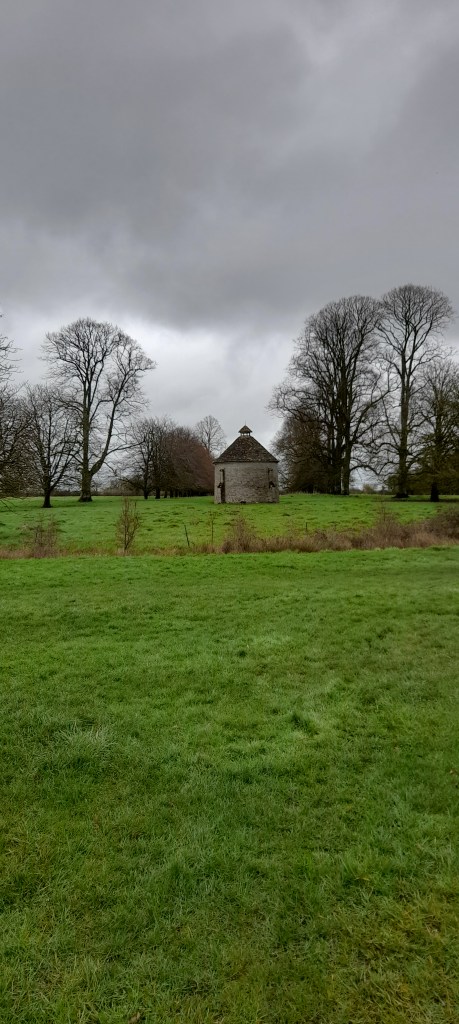
 We didn’t reach this wonderful Dovecote as it was really sploshy and muddy but it’s definitely worth a photo. Built in the 1930s but inspired by the 18th-century dovecote at Avebury Manor in Wiltshire.