AVEBURY STONES
Recognised as a World Heritage Site. The stones are massive. One weighing 100 tonnes. The outer stone circle is the largest of its kind in the world.
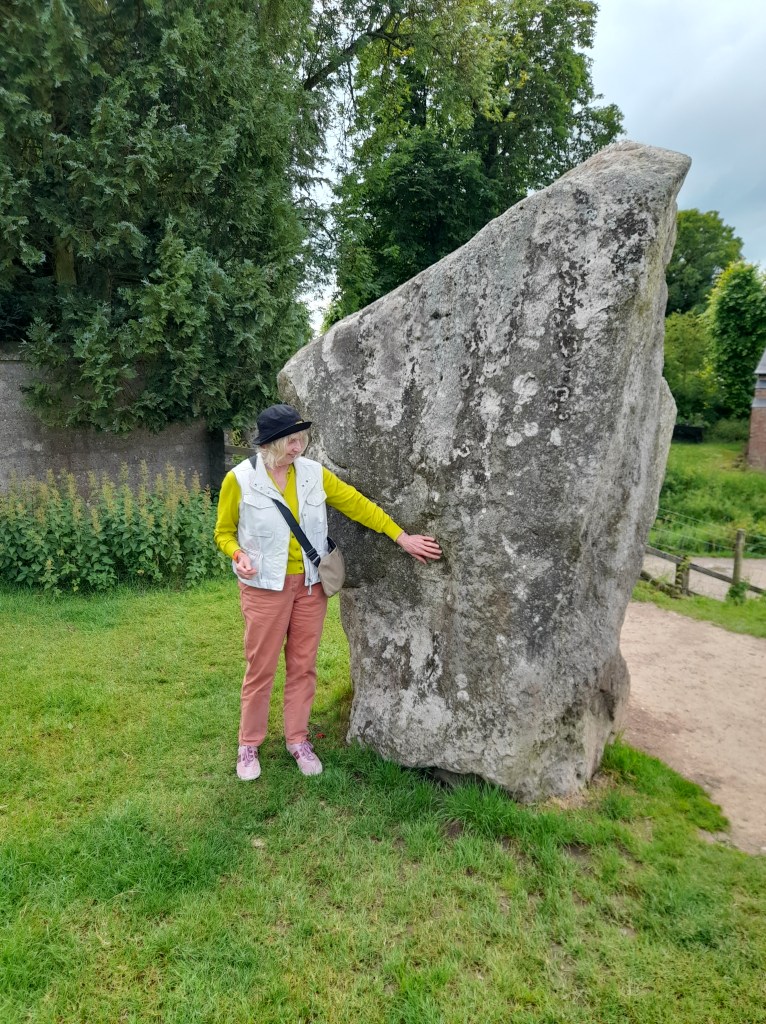
I didn’t make the 21st June but the Summer came in anyway. Although I made a visit the week before to the Avebury Stones in Wiltshire. They’re nearly a thousand years older than Stonehenge and a lot more accessible. I did a tour – a very relaxed tour with a knowledgeable guide. Yet plenty of people were there under their own steam. Hugging stones and walking amongst them. It was a bleak day and it felt right.
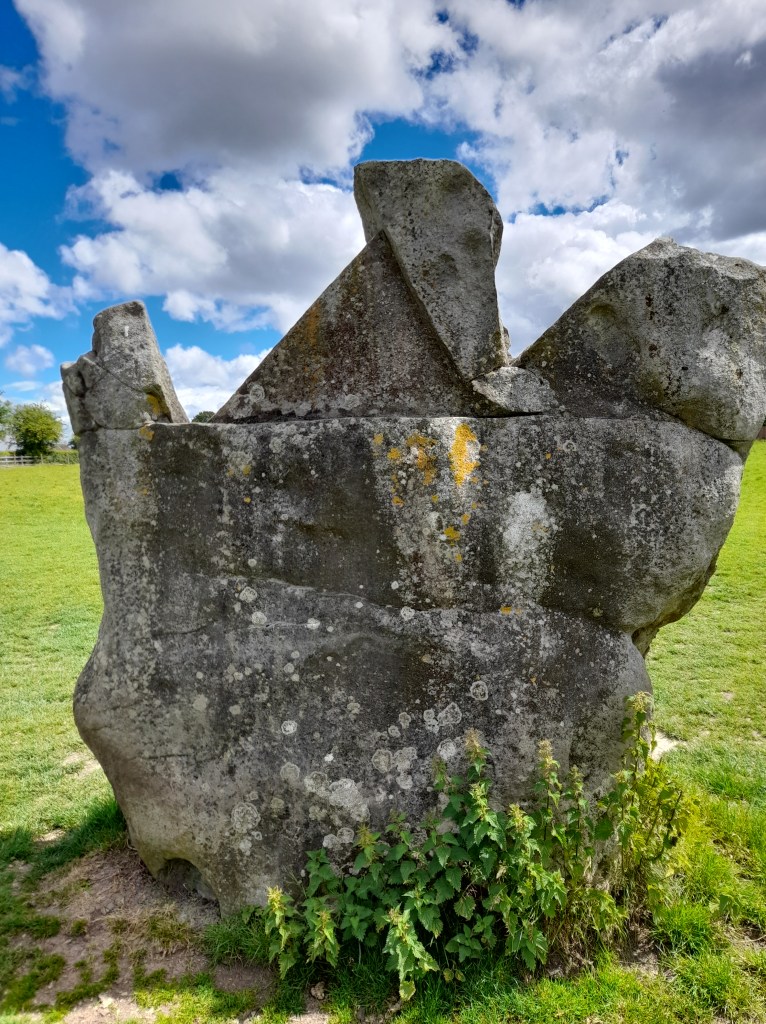
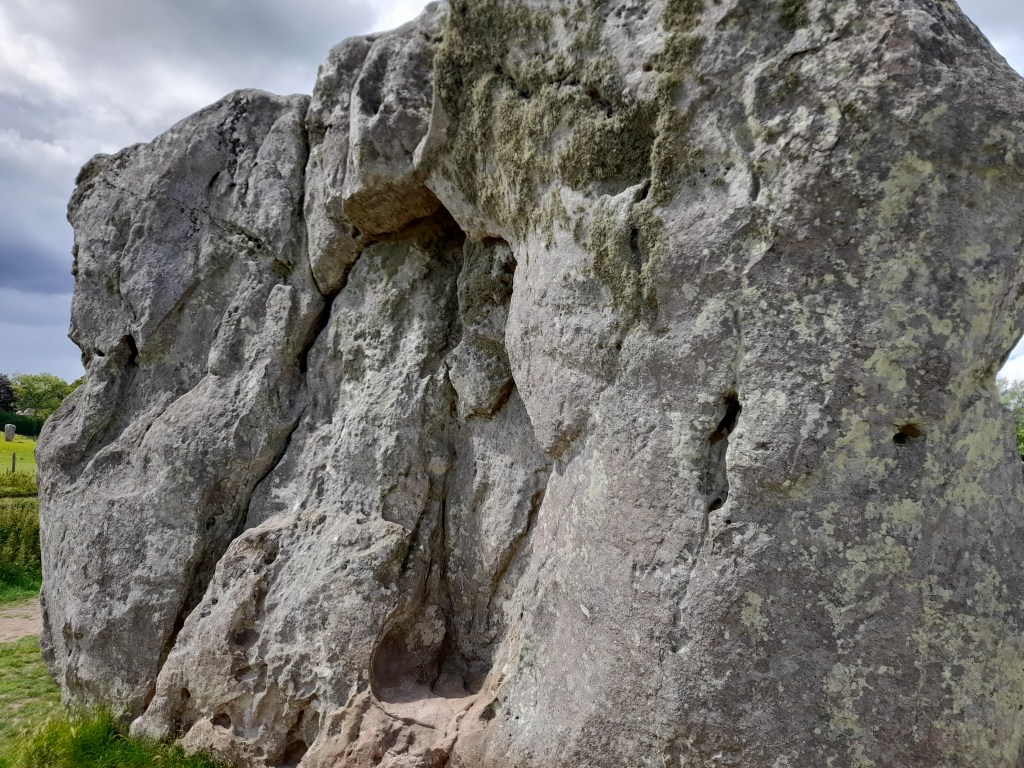
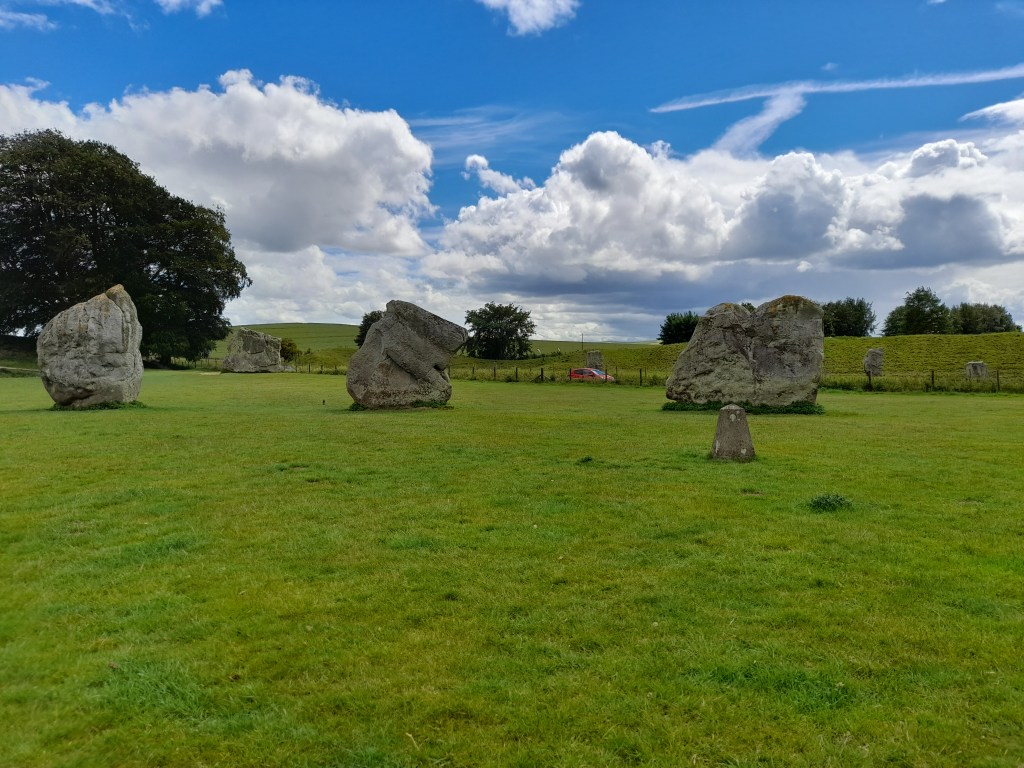
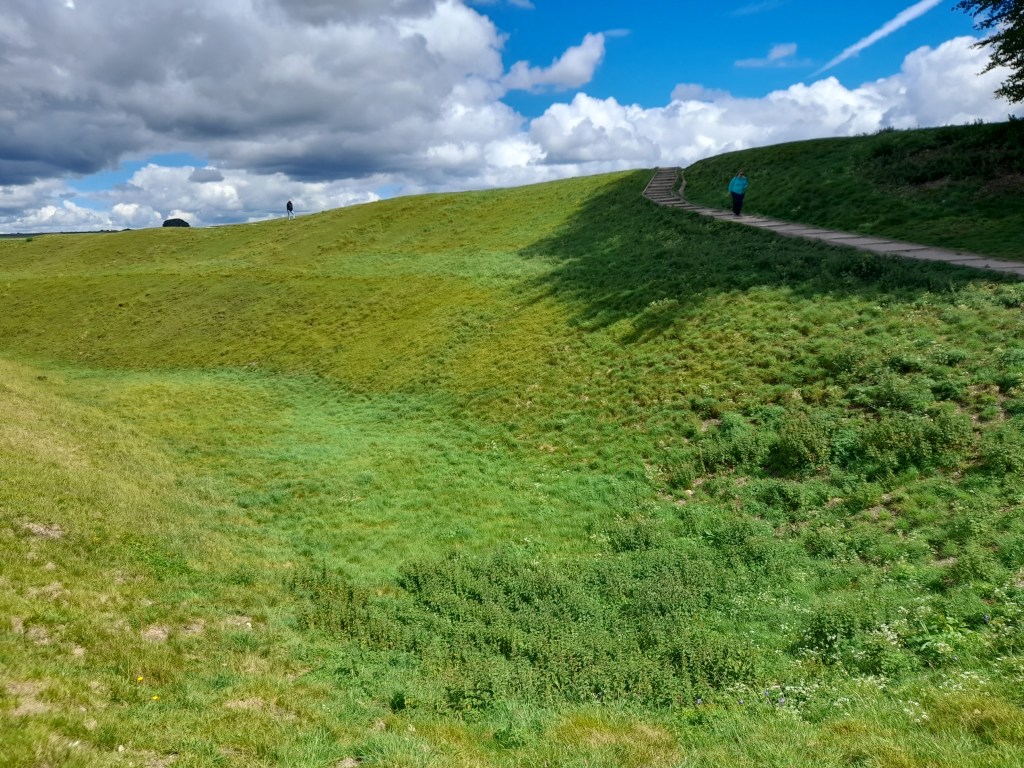
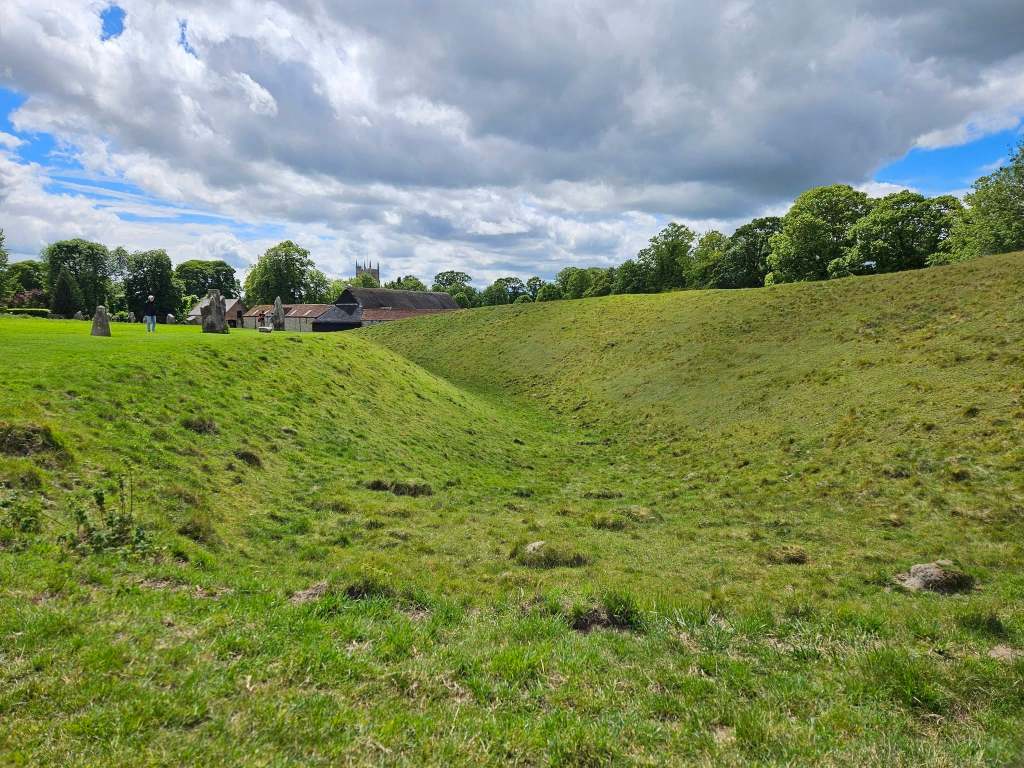
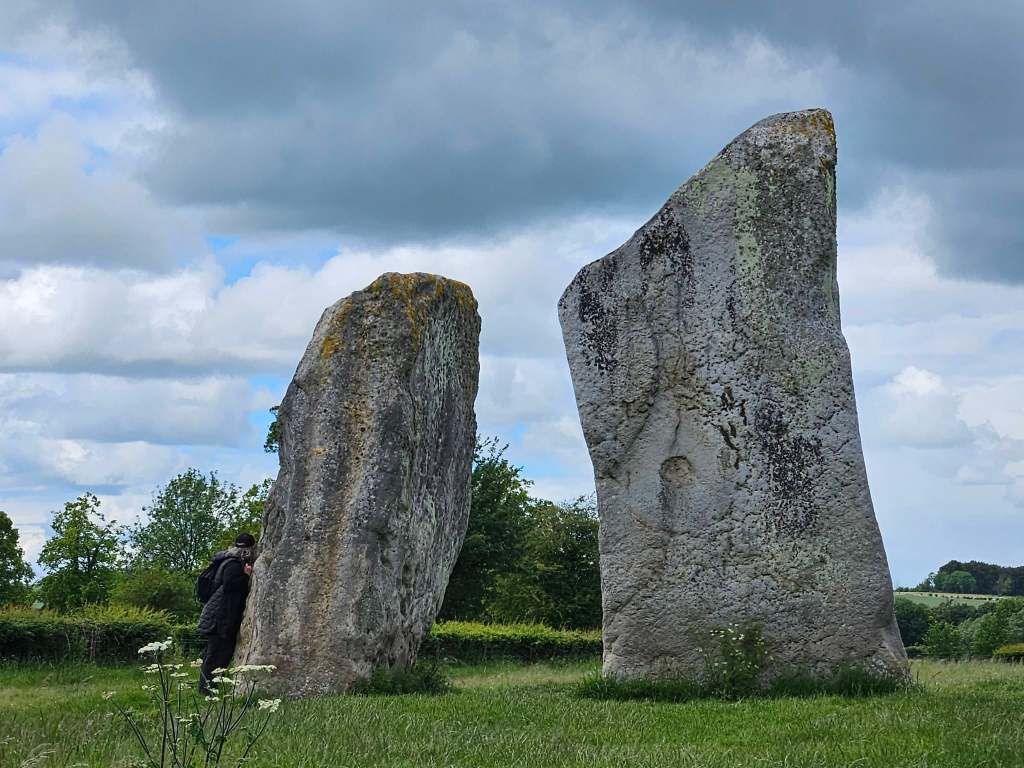
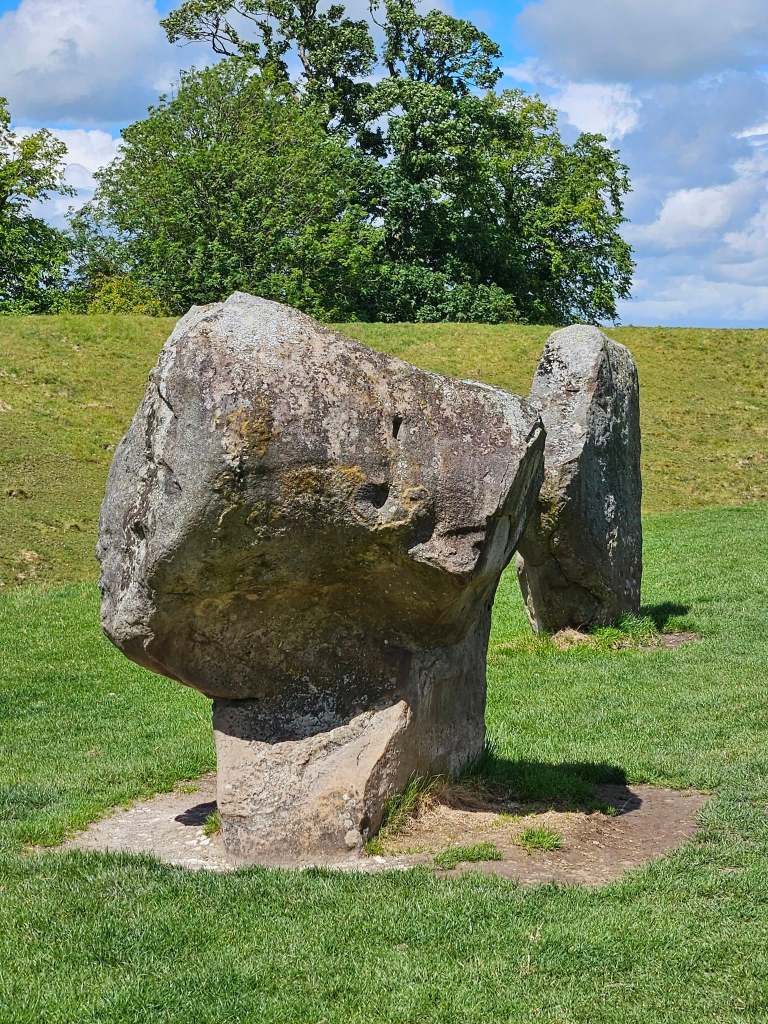
Sadly, Medieval folk were so suspicious of these foreboding great rocks that they set about knocking them down. Over time they became buried and forgotten. At least compared to Stonehenge. It wasn’t until 1908 that an archaeologist, Harold St George Gray, became interested. He didn’t seem so interested in the stones rather than the Avebury Henge. An incredibly deceptive ditch surrounding the whole area.
It’s deceptive because approaching it from a distance you think it’s just a little ditch. It’s not! It’s 30 feet deep and a bit scary. He managed to unearth some interesting tools and other crude objects probably used to dig out the ditch in the first place.
The next excavation was carried out by Alexander Keiller who bought and lived in the rather nice and convenient Avebury Manor – situated close to the stones. Throughout the 1930s he set about re-erecting and unearthing the stones. Many of them had been hidden for centuries. He did his best. It cost a lot of money and he managed to restore the stones to a recognisable circle of large outer, north and south circles. Unfortunately he wasn’t able to complete the circles nor, it seems, discover what they were there for. Excavations then ceased. It probably took a lot of his money.
They are now owned by the National Trust and managed by English Heritage. That may be why it’s open to viewing and very relaxed. Or perhaps because it’s a vast field across a main road surrounded by some houses. The stones do appear to be less vulnerable to graffiti than Stonehenge. And a bit of random hugging doesn’t appeare to have chipped away at their beauty and impressiveness.
Nowadays it’s been decided, rightly or wrongly, not to carry out any more excavation. They’re impressive and atmospheric as they are. But a visit does leave you pondering on what they were actually created for. And where is its Stonehenge Hele Stone equivalent. Perhaps that makes it even more mysterious and wild.


